The Royal Rajasthan
The Royal Rajasthan
TOUR OVERVIEW
An exciting introduction to India’s most celebrated attractions of the Golden Triangle and Rajasthan, staying in iconic luxury and heritage accommodation. During this tour, get a wonderful introduction to North India’s regal history. From the fascinating city of Delhi and the iconic Taj Mahal in Agra, to the royal state of Rajasthan with its fabulous palaces and forts, there is so much to discover. See some of the most important sites that make up the legendary Golden Triangle of Delhi, Agra, and Jaipur followed by Jodhpur and Udaipur. This trip will have you coming back for more.
IS THIS HOLIDAY FOR YOU?
This touring and sightseeing adventure holiday incorporates many of the highlights of northern India into little more than a week and is perfect for anyone wanting to experience the culture and architecture to be found in this corner of North India. There is a fair amount of travelling, as we journey between Delhi, Agra, Jaipur, Jodhpur and Udaipur. However, using private, air-conditioned transportation, the effect of this is kept to a minimum. Whilst sightseeing, there will be some leisurely walking on city streets, local markets and on good trails.


Why Great India Retreats?
We have carefully put together this trip for those wanting to see the outstanding highlights of Royal Rajasthan in one perfect package. More than the typical Golden Triangle tour this area is rightly renowned for, we also include the rich culture and heritage of Jodhpur and Udaipur. With visits to the architectural wonders of Rajasthan and Agra; this holiday represents a trip of the lifetime.
Meeting and assistance on arrival and you will be transferred to your hotel.
Delhi, the capital of India, has a long and storied history that goes back 3,000 years. One of the world’s oldest continuously inhabited cities, and has been the beating heart of many empires, from the Delhi Sultanate and the Mughals to the British. Each one has left its imprint on Delhi’s architecture, creating a varied and multicultural cityscape. Three UNESCO World Heritage sites span the centuries and are arguably the highlights of our tour today. The 12th-century Qutub Minar is an early example of Delhi’s Islamic heritage. Humayun’s Tomb, built in the 16th century, features a garden mausoleum with a striking octagonal design. Finally, there is the iconic sandstone Red Fort, or Lal Quila, built by the Mughal emperor Shah Jahan in the 17th century. Today, Delhi is split between ‘Old Delhi’, with its narrow streets, bazaars, and historical monuments, and ‘New Delhi’, with its wide boulevards and grand government buildings. One thing they both have in common is delicious street food ranging from chaat and kebabs to flaky parathas, making Delhi a food lover’s paradise.
A leisurely breakfast and drive to Agra.
Afternoon we drive to the Agra Fort, another UNESCO World Heritage Site. There has been a walled city on this site for more than a thousand years, but the present structure was built by the Mughals. Commanding gates, fashioned in red stone, as well as an excellent view of the Taj Mahal, just 2 and a half kilometres away, are highlights of this impressive site. We can also take the opportunity to drive across the Yamuna River to gain a different perspective of the Taj from the opposite bank. As our final Agra experience, we find a restaurant in one of the shopping streets and take a late lunch, with the chance to do some exploring in the bazaar.
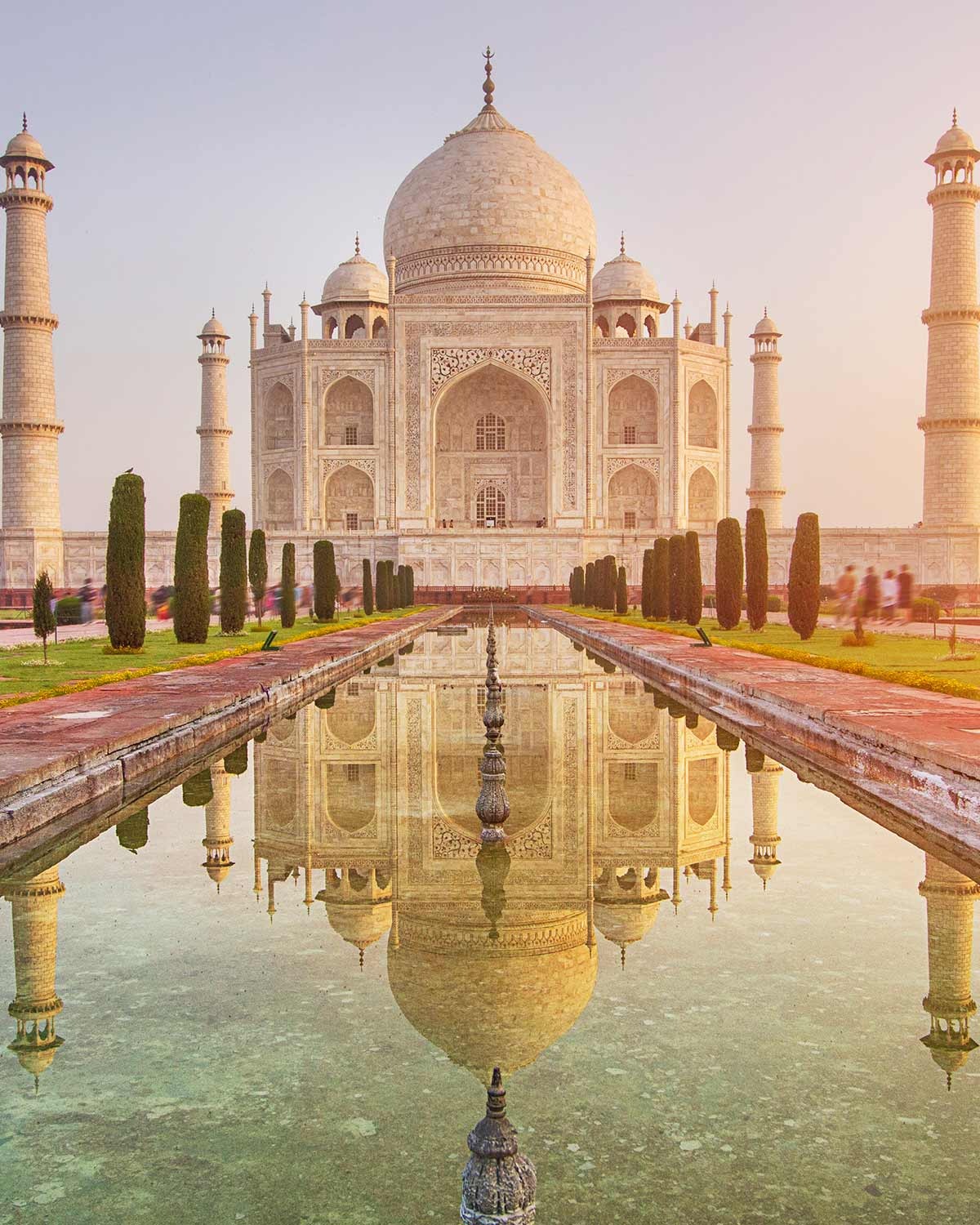
A highlight of the tour, this morning at sunrise, we visit the Taj Mahal – one of the man-made ‘seven wonders’ of the world. Whatever you think you know about the Taj Mahal from the countless photographs and images which are worldwide, you are in for a pleasant surprise. No photograph can adequately portray the exquisite beauty, precision and craftsmanship of this incredible monument built for love. It took 20,000 people 22 years to build it, using over 1000 elephants to transport the marble for its dazzling white walls and dome. Twenty eight different types of precious and semi-precious stones are inlaid into parts of the marble, some of these depicting verses from the Koran in highly decorative script. The Taj Mahal itself is a mausoleum for Mumtaz the wife of its builder Shah Jahan and is set in tranquil gardens providing several vantage points from which to contemplate the building. From an upper terrace it is possible to look across the Yamuna River, the largest tributary of the Ganges, towards the Agra Fort. A visit to the Taj Mahal can easily absorb a whole day, but there are more sights that we want to see in Agra.
driving north-east to the well-preserved former Mughal capital of Fatehpur Sikri. The drive will take at least 4 hours. Built during the second half of the 16th century by the Emperor Akbar, Fatehpur Sikri (the City of Victory) was the capital of the Mughal Empire for just 10 years. Legend has it that the city was built here after a chance meeting between the emperor and a holy man close to this spot, but ultimately its location proved to be strategically untenable and it was abandoned. There is no inhabited city here but the complex of monuments and temples, all in a uniform architectural style, are superbly preserved and includes one of the largest mosques in India, the Jama Masjid. The city is now a World Heritage Site. Following a guided sightseeing tour of this ancient city, we continue our drive to Jaipur
Jaipur is a living tapestry of grand forts, bustling bazaars and centuries-old craftsmanship. Founded in 1727 by Maharaja Sawai Jai Singh II, India’s first planned city rises majestically from the Rajasthan plains. The nickname ‘Pink City’ comes from the terracotta-rose hue painted across the old town in 1876 to welcome the Prince of Wales. The gesture of hospitality has become a permanent identity. Here, you will find auto-rickshaws weaving past palace walls and street vendors selling fresh samosas beneath intricately carved balconies. The atmosphere is both regal and chaotic. A city landmark is Hawa Mahal, the extraordinary five-story facade of 953 jali windows designed so royal women could observe street life unseen. There is also the City Palace, the current maharaja’s residence, which is a complex of courtyards and museums. You will also find Jantar Mantar, the 18th-century astronomical observatory with massive geometric instruments still accurate today. Do not miss visiting the lively bazaars to soak in the sights and sounds.
Journey through Rajasthan’s heartland, typically via NH48 and NH25, offering a smooth, scenic experience passing rural landscapes, bustling towns, and desert, views.
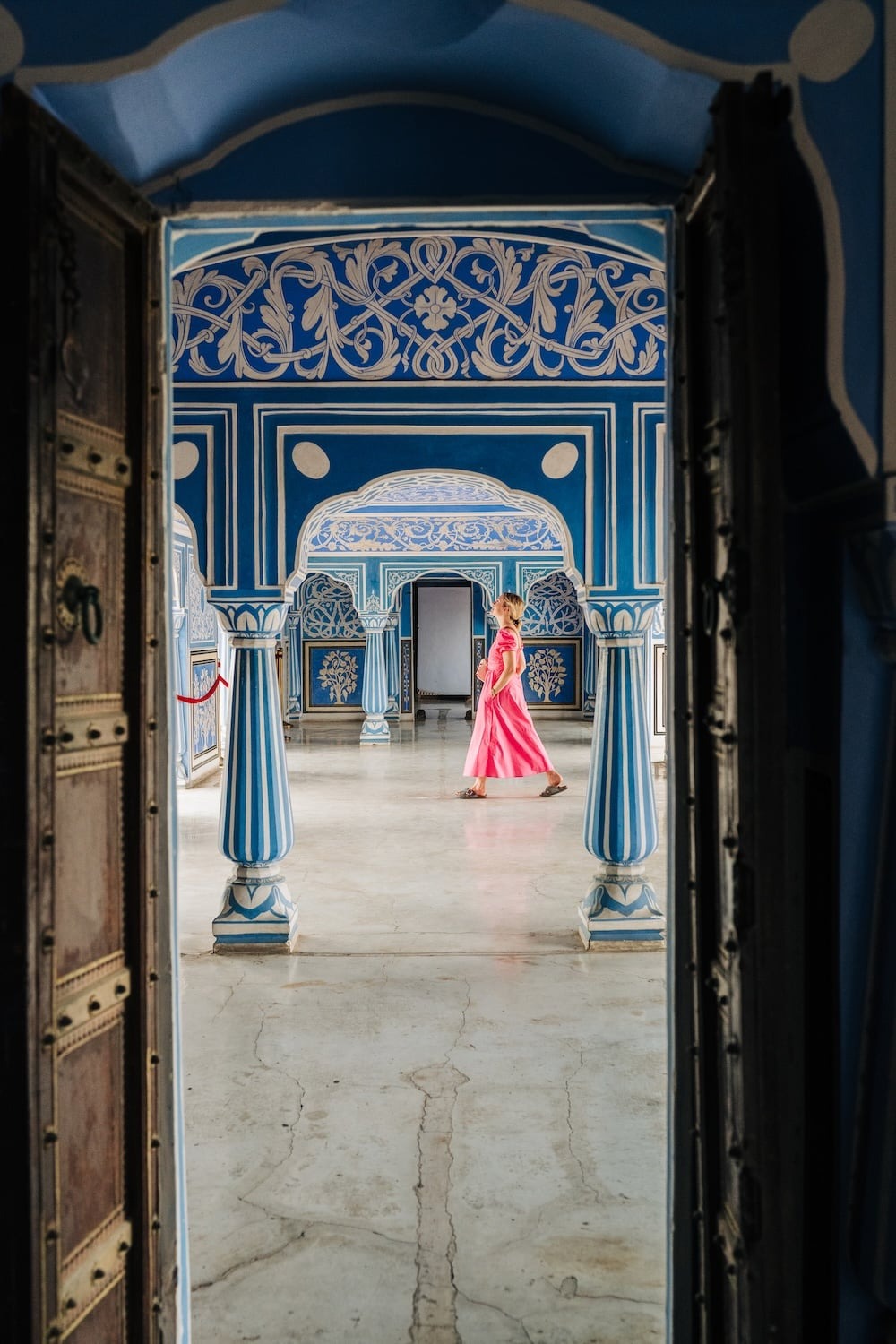
One of the most distinctive features of Jodhpur is its azure-hued buildings that dot the landscape of the old city. Legend has it that the Brahmins, the priestly class of Jodhpur, began painting their houses blue to denote their caste and to keep them cool during the scorching summer months. Today, the labyrinthine streets of the old city are a photographer’s paradise, with their vibrant blue facades creating a mesmerising tapestry of colours against the backdrop of the desert.
Nestled in the heart of the Thar Desert in the royal state of Rajasthan, India, lies the enchanting city of Jodhpur, often referred to as the “Blue City” and the “Sun City.” Steeped in history, culture, and architectural splendour, Jodhpur beckons travellers from far and wide with its majestic forts, vibrant bazaars, and timeless charm.
Dominating the skyline of Jodhpur is the majestic Mehrangarh Fort, an imposing citadel perched atop a rocky hilltop. Built in the 15th century by Rao Jodha, the fort boasts impressive ramparts, intricately carved balconies, and palatial courtyards, offering panoramic views of the city below. Within the fort complex lie a treasure trove of palaces, including Moti Mahal, Phool Mahal, and Sheesh Mahal, each adorned with exquisite artwork and royal artefacts that narrate the saga of Jodhpur’s regal past.
Situated amid the lush green hills of the Aravalli Range of Rajasthan, Udaipur rises like a mirage from the arid landscape. It is a city of shimmering lakes and marble palaces that seem to float between earth and sky. Known as the ‘City of Lakes,’ Udaipur is renowned for its Rajputana grandeur, romantic vistas, and timeless charm that beckon travellers from across the globe. The abundance of lakes has also earned Udaipur the nickname ‘Venice of the East.’
As you first lay eyes on Udaipur, you’ll understand why it’s often hailed as India’s most romantic city. The serene waters of Lake Pichola reflect the ivory facades of palatial buildings, creating a dreamlike panorama that has enchanted visitors for centuries. This picturesque setting has made Udaipur a favourite among filmmakers, with the James Bond film Octopussy famously showcasing its ethereal beauty to the world.
While the lakes are undeniably captivating, Udaipur boasts majestic forts and historic palaces that stand as testaments to the city’s rich heritage. Museums and galleries offer fascinating glimpses into Udaipur’s vibrant culture. Nature enthusiasts will find solace in the city’s natural landscapes. Architectural marvels like temples and intricately designed buildings, lively traditional fairs and festivals add a touch of vibrancy to the city, while delectable cuisine tantalises taste buds with its unique flavours.
Perched majestically on the shores of the serene Lake Pichola, the resplendent City Palace stands as a quintessential symbol of Rajasthan’s rich history and architectural splendour. Commissioned by Maharana Udai Singh II, the City Palace was expanded over four centuries by his successors. But what’s more surprising is the sheer size of the palace that’s spread over an area of 4 acres. A city within a city, the massive complex comprises of numerous courtyards, pavilions, gardens, and halls, each exquisitely adorned by towering facades, majestic domes, and ornate balconies.
A leisurely breakfast and we take our flight back to Delhi.
A private transfer to the airport for your flight back home.